Tuesday, December 26, 2017

Big Data in Healthcare - Hype or Reality


The Big Data Questions

Big data is generating a lot of hype in every industry including healthcare. People are looking for answers to questions like:

    When will I need big data?
    What should I do to prepare for big data?
    What’s the best way to use big data?
    What is Health Catalyst doing with big data?

It’s important to separate the reality from the hype and clearly describe the place of big data in healthcare today, along with the role it will play in the future.

Big Data in Healthcare Today


A number of use cases in healthcare are well suited for a big data solution.
Some academic- or research-focused healthcare institutions are either experimenting with big data or using it in advanced research projects.
This presentation will examine what’s being done to simplify big data and make it more accessible.

A Brief History of Big Data in Healthcare

In 2001, Doug Laney, now at Gartner, coined the term “the 3 V’s” to define big data:
  • Volume
  • Velocity
  • Variety
Other analysts argued that this is too simplistic but for this purpose let’s start here.


EMRs alone collect huge amounts of data, but according to Brent James of Intermountain Healthcare most of the data is for recreational purposes.
Our work with health systems shows that only a small fraction of the tables in an EMR database (perhaps 400 to 600 tables out of 1000s) are relevant to the current practice of medicine and its corresponding analytics use cases.

There is certainly variety in the data, but most systems collect very similar data objects with an occasional tweak to the model.
That said, new use cases that support genomics will certainly require a big data approach.


Health Systems Without Big Data

Most health systems can do plenty today without big data, including meeting most of their analytics and reporting needs.
We haven’t come close to stretching the limits of what healthcare analytics can accomplish with traditional relational databases—and using these databases effectively is a more valuable focus than worrying about big data.


Most healthcare institutions are swamped with some very pedestrian problems such as regulatory reporting and operational dashboards.
As basic needs are met and some of the initial advanced applications are in place, new use cases will arrive (e.g. wearable medical devices and sensors) driving the need for big-data-style solutions.

Barriers Exist for Using Big Data

Expertise and Security

Several challenges with big data have yet to be addressed in the current big data distributions.
Two roadblocks to the general use of big data in healthcare are the technical expertise required to use it and a lack of robust, integrated security surrounding it.


Expertise  

The value for big data in healthcare today is largely limited to research because using big data requires a very specialized skill set.
Hospital IT experts familiar with SQL programming languages and traditional relational databases aren’t prepared for the steep learning curve and other complexities surrounding big data.

Data scientists are usually Ph.D.-level thinkers with significant expertise.
These experts are hard to come by and expensive, and only research institutions usually have access to them.
Data scientists are in huge demand across industries like banking and internet powers with deep pockets.

The good news is, thanks to changes with the tooling, people with less-specialized skillsets will be able to easily work with big data in the future.
Big data is coming to embrace SQL as the lingua franca for querying. And when this happens, it will become useful in a health system setting.
 

Thursday, August 13, 2015

Information Age Healthcare - The need of hour for India

In India as well as countries around the globe, the cost of taking care of people continues to rise every year. At the same time that the world’s population is aging, chronic diseases like asthma, diabetes, heart disease and obesity are increasing at rapid pace in every age group. In addition to this shrinking workforce and shortage of doctors and nurses (India: is currently running short of at least 600,000 doctors and 1 million nurses), along with the fact that fewer young medical professionals are training to replace them.
Combine all this with legacy hospital infrastructure and technology, paper-intensive record-keeping, and inconsistent standards, and there is no doubt that the situation calls for a smarter, more effective approach to healthcare.  This is also critical because a robust healthcare system is the hallmark of organized development. Healthy citizens will translate into a productive workforce and a thriving economy.

By definition this is a holistic approach to healthcare that integrates the best of technologies to remove information barriers, enabling data to be analyzed and shared in real time. Smart healthcare is about forging time and creating cost-saving collaborative partnerships among doctors, administrators, insurers, and healthcare institutions. It is about integrating communications into a single, consolidated infrastructure, and giving communities and individuals the tools and knowledge they need in order to make more informed choices. Such digital healthcare delivery systems powered by the Network can significantly improve operational efficiency, optimize collaboration, and lead to better patient care and outcomes.
A comprehensive solution that integrates real-time voice and video, clinical collaboration, patient and asset tracking, electronic medical records and nurse call information allows hospitals and healthcare professionals to spend more time with patients and less time on administrative tasks. Smart healthcare solutions can help improve both care delivery and business operations for hospitals and medical professionals by:

  • Providing essential information to doctors and staff, regardless of the devices used
  • Giving real-time access to patient records, images and expert consultations 
  • Accurate tracking and location of patients, staff, equipment and medical supplies 
  • Education programs for medical staff and patients

These solutions take full advantage of the limitless possibilities of Telehealth. IP video technology can link patients and providers to specialists and primary care professionals, paving the way to faster and more cost-effective remote medical consultations, patient diagnosis, and chronic disease management.
In countries like India, critical investments are needed in healthcare (remote health, elderly care), health information exchange, and telehealth. Evidence strongly suggests that implementing Information and Communications Technologies (ICT) can result in higher quality and safer, more patient-responsive healthcare. Mobile collaboration technologies and BYOD for example can be useful in delivery of better health outcomes.

In summary therefore, adoption of technology enabled solutions complimented with an array of healthcare management services, will help the healthcare industry in India leapfrog into 'Information Age Healthcare', much quicker than imagined before.

Tuesday, June 9, 2015

Online Healthcare in 2015 & Beyond


There are all kinds of facts, figures, and guesses floating around right now as to what will be the top healthcare challenges and trends in 2015 and beyond. The Indian healthcare sector alone is estimated to touch $160 billion in 2017 – roughly double from what it was in 2012 (according to a report by Equentis Capitals) resulting in the CAGR growth rate of about 15%. There are a bunch of factors such as easier access to good healthcare services, relative increase in incomes and more emphasis on health awareness all contributing to this growth. Not just this, there is a significant demand in the quality of healthcare services in Tier-II and Tier-III cities which means people are recognizing the need for specialty-care.


India’s obvious advantage is the large pool of medical professionals and the dramatically lower medical costs as compared to other Asian and western countries. The surgeries reportedly cost one-tenth of that in US or Europe, making it a lucrative location for medical tourism and even R&D. Other than being widely known to be an English speaking country, alternative techniques like Homeopathy, Ayurveda, Yoga and Unani make it stand out when compared to other competing south-east Asian and middle-eastern countries.

Technology will be a game changer in the manner in which healthcare services will be delivered in India. The private sector will be the major driving force behind technology adoption in the Indian healthcare segment. To optimize costs and effectively manage operations, IT solutions will become an integral part of process management, patient care and the Management Information System (MIS) in hospitals. With the health insurance sector poised for major growth in the coming decade, increasing demand from this sector for more efficient systems for storage and retrieval of information will put pressure on hospitals and other healthcare providers to imbibe technology to modernize existing infrastructure.

The convergence of healthcare with upcoming technologies such as Cloud Computing and wireless technologies will play a key role in improving accessibility and meeting the challenge of manpower shortage. The coming years are expected to witness greater deployment of tools such as Telemedicine, Teleradiology, Hospital Information Systems (HIS)/Hospital Management Information Systems (HMIS), online or Electronic Medical Records (EMR), etc.

InnovationJam_Animated-600x339


It is estimated that there will be over 550 million internet users in 2018. 
In India, there will be an estimated 200M smartphone users by 2016.

Online healthcare has increased communication among various people. It is not only making doctors and hospitals more accessible to patients, it is also helping patients connect with other patients. People want to read real stories not just to be informed, but to be inspired. Furthermore, it is assisting people to learn more about their bodies and give all kinds of health information to potential patients- making them aware of treatment options and preventive measures.

Doctors are connecting with other doctors across the world. This global shift in digital healthcare is making it possible for people to receive more personalized and precise medicine and health services – reducing errors and cost, in turn, improving quality and providing easier access to medical facilities.

Challenges

India is home to a majority of people who are referred to doctors by family and relatives or by word-of-mouth. Making people believe that their health issues can be handled through the internet is a real problem. Building trust among these people can spell great success for healthcare portals.

Another point to note is that there are several healthcare start-ups focusing solely on ‘booking appointments’, and not many players in the hospitalization space. In India, the domestic hospitalization industry is a total of $280 billion (according to a McKinsey report), while the international hospitalization industry is indicated to be about $4 + billion (according to a report by Ministry of Health/KPMG 2014). This means, massive business for start-ups like Credihealth, who are adopting hospitalization as their forté.

Wednesday, May 27, 2015

Technology & Medicine

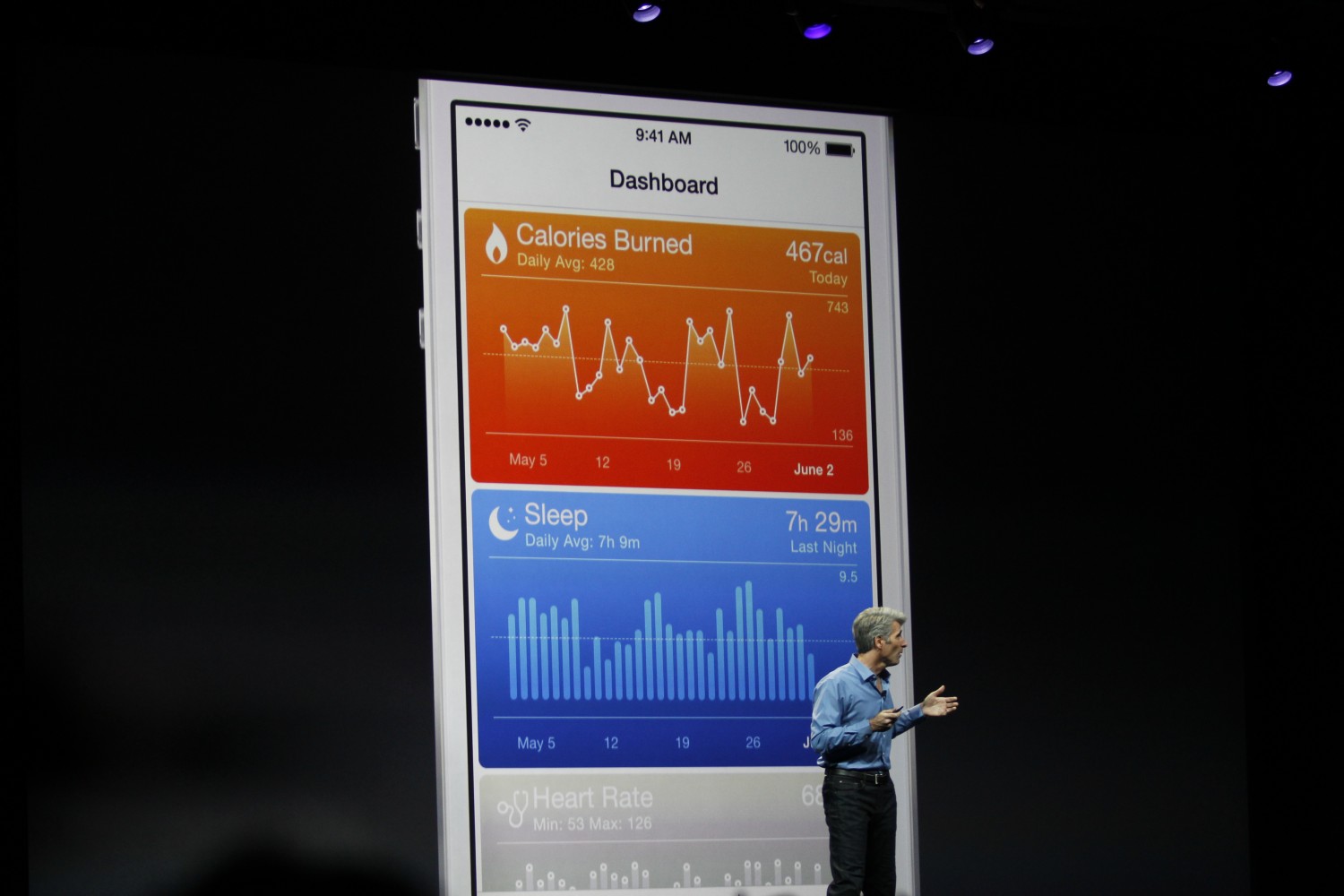
The most significant announcement that Apple made in 2014 wasn’t a larger-sized iPhone. It was that Apple is entering the health-care industry. With HealthKit, it is building an iTunes-like platform for health; Apple Watch is its first medical device. Apple is, however, two steps behind Google, IBM, and hundreds of startups. They realized much earlier that medicine is becoming an information technology and that the trillion-dollar health-care market is ripe for disruption.


2015 will be the year in which tech takes baby steps in transforming medicine. The technologies that make this possible are advancing at exponential rates; their power and performance are increasing dramatically even as their prices fall and footprints shrink. The big leaps will start to happen at around the end of this decade.


The health devices that companies such as Apple, Microsoft, and Samsung are developing are based on MEMS sensors, which are one of the exponential technologies. These enable the measurement of things such as heart rate, temperature, blood pressure, and activity levels and can feed data into cloud-based platforms such as HealthKit. They will be packaged in watches, Band-Aids, clothing—and contact lenses. Yes, Google announced in January that it is developing a contact lens that can measure glucose levels in a person’s tears and transmit these data via an antenna thinner than a human hair. In July, it said that it was licensing the technology to Novartis, enabling it to market it to people with diabetes. We will soon have sensors that monitor almost every aspect of our body’s functioning, inside and out.


Advances in Microfluidics are making possible the types of comprehensive, inexpensive diagnostics that in a single drop of blood, it can test for things such as cancer, cholesterol, and cocaine. Newer technologies coming from Nano biophysics like Gene-Radar, a portable nanotechnology platform that uses biological nanomachines to rapidly and accurately detect the genetic fingerprints of organisms. It will enable the detection of diseases such as HIV and Ebola and deliver the results to a mobile device within minutes—for a hundredth of the cost of conventional tests. By combining these data with EMR (Electronic Medical Records) and the activity and lifestyle information that our smartphones observe, Artificial Intelligence-based systems will monitor us on a 24 x 7 basis. They will warn us when we are about to get sick and advise us on what medications we should take and how we should improve our lifestyle and habits. 

With the added sensors and the apps that tech companies will build, our smartphone will become a medical device akin to the Star Trek tricorder. With health data from millions of patients, technology companies will be able to take on and transform the pharmaceutical industry—which works on limited clinical-trial data and sometimes chooses to ignore information that does not suit it. These data can be used to accurately analyze what medications patients have taken, to determine which of them truly had a positive effect; which simply created adverse reactions and new ailments; and which did both.


And then there is the genomics revolution. The cost of sequencing a human genome has fallen from $100 million in 2001 to about $1000 today and will likely cost as much as a blood test by the end of this decade. What this means is that the bits and bytes that make up a human being have been deciphered; for all intents and purposes, we have become software.


2014 marked an inflection point in the technology curve for medicine. It isn’t yet clear which technology advances will indeed affect humanity and which will be nothing more than cool science experiments. What is clear is that we have entered an era of acceleration and that there is much promise and peril ahead.

Sunday, November 30, 2014

Technology Trends in Indian Healthcare

Technology has made almost anything possible in the field of healthcare. Many of the devices invented can help users lead healthier and productive lives and has progressed into an atmosphere of organized data in the healthcare flowing from patients to physicians, diagnostic clinicians, pharmacists and medical insurance billing specialists. Here is a list of technology trends shaping the future of medicine


#1.BYOD prevalence


The BYOD also known as Bring Your Own Device is increasing popularity in the healthcare industry. The consumerization of IT and the BYOD movement in the workplace has proven to be extremely beneficial for the healthcare industry, allowing providers to access patient data, billing information, clinical trial data and employee information on-the-go. To help deal with healthcare’s primary BYOD challenges, since managing information involves risk, the healthcare industry should consider whole security programs allowing for longer term security strategies.


#2.Big data


Big data has lately begun to become an integral aspect in healthcare. It is a term used for massive amounts of information that can be interpreted by analytics to provide an overview of trends or patterns. Organizations influence big data by gathering records and information captured and then interpreting it with analytics. It has applications range from provider-specific business intelligence  over an entire state's health records to identify people who are at risk for certain ailments and can help target early warning signs and improve patient safety.

Sunday, July 27, 2014

Wearable Health Technology: The future of medical devices

The terms “wearable technology“, “wearable devices“, and “wearables” all refer to electronic technologies or computers that are incorporated into items of clothing and accessories which can comfortably be worn on the body. These wearable devices can perform many of the same computing tasks as mobile phones and laptop computers; however, in some cases, wearable technology can outperform these hand-held devices entirely. Wearable technology tends to be more sophisticated than hand-held technology on the market today because it can provide sensory and scanning features not typically seen in mobile and laptop devices, such as biofeedback and tracking of physiological function.

Generally, wearable technology will have some form of communications capability and will allow the wearer access to information in real time. Data-input capabilities are also a feature of such devices, as is local storage. Examples of wearable devices include watches, glasses, contact lenses, e-textiles and smart fabrics, headbands, beanies and caps, jewelry such as rings, bracelets, and hearing aid-like devices that are designed to look like earrings.


As the potential uses in various fields continues to grow, the sociological and cultural impact wearable technology will have in the future should not be minimized. Already, the current hand-held devices available to consumers, such as Smart Phones, iPods and tablets, have changed the technological and social landscapes on a global scale, such that, walking out in public and seeing an individual engaging with a hand-held device is commonplace. Such an image was nonexistent only 20 years ago. With that in mind, developers and analysts predict that wearable technology will very quickly change the technological and cultural landscapes once again, and may even change the nature of mobile phones and other hand-held devices entirely.

The first round of technology may be limited, but eventually the companies could compete in a global blood-sugar tracking market worth over $12 billion by 2017, according to research firm GlobalData.


Non-invasive technology could take many forms. Electricity or ultrasound could pull glucose through the skin for measurement, for instance, or a light could be shined through the skin so that a spectroscope could measure for indications of glucose.


Google has been public about some of its plans: it has developed a “smart” contact lens that measures glucose. In a blog post detailing plans for its smart contact lens, Google described an LED system that could warn of high or low blood sugar by flashing tiny lights. It has recently said it is looking for partners to bring the lens to market.
Modal Trigger
Google is developing a contact lens to help diabetics manage their blood sugar levels.Photo: Getty Images
The device, which uses tiny chips and sensors that resemble bits of glitter to measure glucose levels in tears, is expected to be years away from commercial development, and skeptics wonder if it will ever be ready.
Previous attempts at accurate non-invasive measurement have been foiled by body movement, and fluctuations in hydration and temperature. Tears also have lower concentrations of glucose, which are harder to track.